Table Of Content
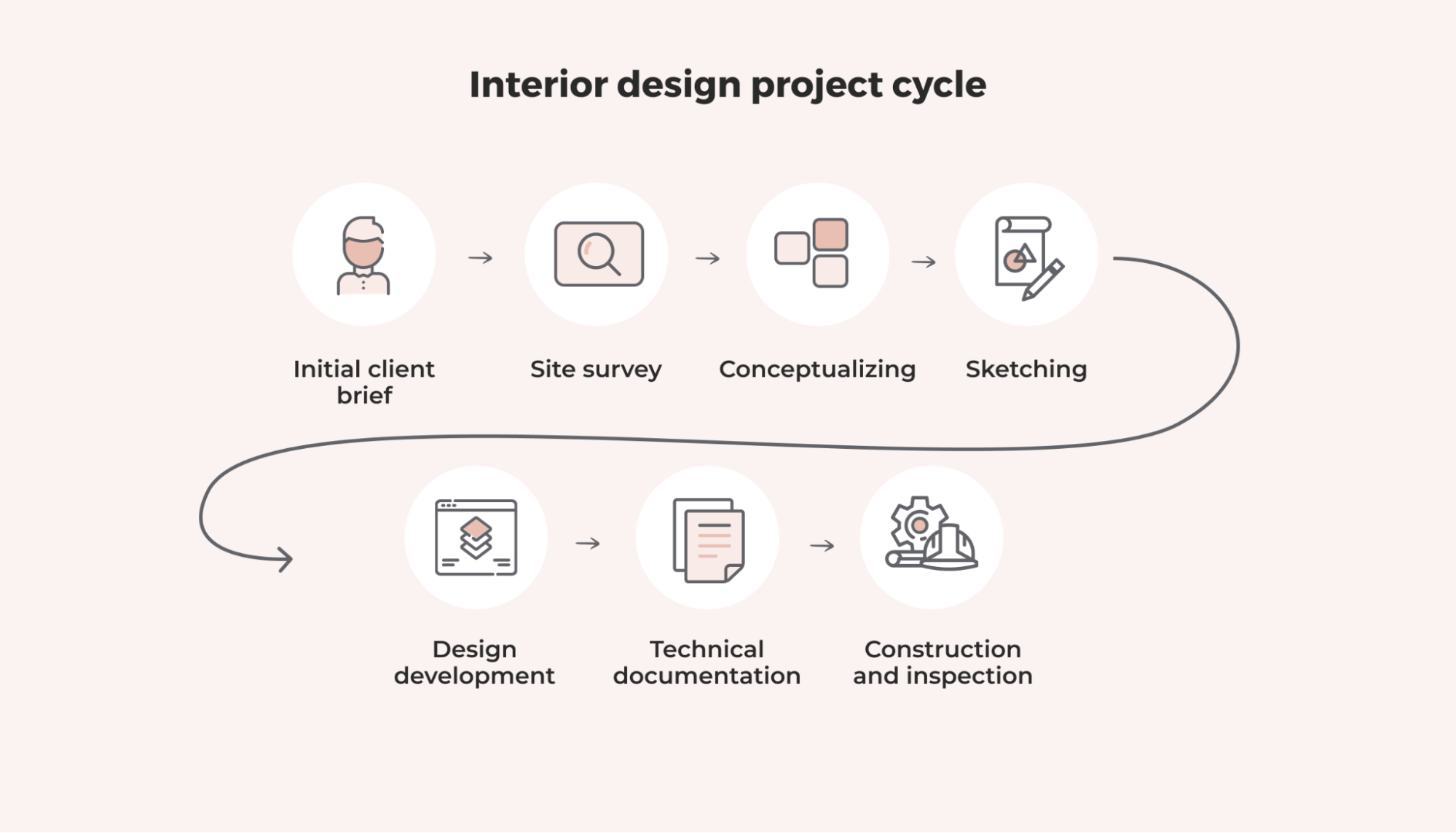
Design briefs serve as a tool to communicate visions and ideas, keeping everyone aligned throughout. The commercial interior market definitely does not cycle through trends as quickly as the fashion industry. Nor do you see the quick rise and fall of fads at the same pace you do in fashion.
Evaluate and select a promising solution
I have 15+ years of career experience in design work and consulting across both tech startups and several marquee tech unicorns such as Stellar.org, Outfit7, Databox, Xamarin, Chipolo, Singularity.NET, etc. I currently advise, coach and consult with companies on design strategy & management, visual design and user experience. My work has been published on Forbes, Hackernoon, Blockgeeks, Newsbtc, Bizjournals, and featured on Apple iTunes Store. You can also measure more objective metrics, such as time needed to complete the task.

What is the design process?
A user flow is a chart or diagram which depicts the path a user will take to complete a certain task. During the research phase, UX designers use a variety of different tools depending on their chosen research methods. You can learn about the most popular UX research tools and how they’re used here. Once you’ve conducted user research, the next step is to analyse your findings and synthesise the results into meaningful, actionable insights. You’ll then present your UX research findings to key stakeholders.
What are the 5 Stages of the Design Thinking Process
Have students learn about independent, dependent, and control variables, and find out who can make the fastest car given their new knowledge. Given scrap cardboard, paper towel tubes, scissors, and glue, how could a student invent their own backscratcher? Engage in the process of how real engineers design products to meet a desired function. The TeachEngineering hands-on activities featured here, by grade band, exemplify the engineering design process. The goal of all the steps that come before this is to have the best possible solution before you move into implementing the design. Your team will spend most of its time, its money, and its energy on this stage.
A simple guide to the design process: kick-start your next project
Transform Your Design Process with ForteWEB™ - Fine Homebuilding
Transform Your Design Process with ForteWEB™.
Posted: Mon, 29 Apr 2024 15:20:45 GMT [source]
You’ve picked out a recipe for potato soup and you’ve bought all the necessary ingredients. Before we can understand the Design Thinking process, it’s important to get to grips with the ideology behind it—that is, Design Thinking. This is the final stage, only reached after the other stages are complete and you're ready to commit to the one idea that works better than all the others. This is when you test your ideas against everything you discovered during your research. This happens when you present to your client, speak to your boss, or examine your project by yourself. If a product is beautiful but entirely inconvenient for use, you can’t expect success with users.
Prototype and test. Repeat.
Each group communicates and presents this information to the rest of the class after they research, brai... The mission of the MIT Sloan School of Management is to develop principled, innovative leaders who improve the world and to generate ideas that advance management practice. Through intellectual rigor and experiential learning, this full-time, two-year MBA program develops leaders who make a difference in the world. The incremental steps help you stay focused on the end consumer and deliver a finished product that they’ll actually need and buy. With custom widgets, you can monitor real-time data from marketing, customer support, CRM, and other apps. The first step is to outline the overall workflow in different stages and standardize the process with deliverables, boards, and events.
At the very beginning, you need to answer one of the most critical questions, “Why such a design is necessary,” analyzing problems and needs. You have to go back to basics from time to time to refresh your memory and improve your design foundations. That’s what we’ll do today by delving deeper into the design cycle. Your team needs to understand who they are designing for and what your users need. For the online bookstore, for instance, you will sketch user journey maps, ensuring seamless browsing, search, and checkout experiences. This involves wireframing key pages like the homepage, book listings, and the checkout process.
Stage 1 in the Design Thinking Process: Empathise with Your Users
It’s common to spend an extended amount of time in the define phase, aligning a team to the same focus. Repetition is necessary if there are obstacles in establishing buy-in. The outcome of each phase should be sound enough to serve as a guiding principle throughout the rest of the process and to ensure that you never stray too far from your focus. As impactful as design thinking can be for an organization, it only leads to true innovation if the vision is executed. The success of design thinking lies in its ability to transform an aspect of the end user’s life. At this phase, bring your team members together and sketch out many different ideas.
In this guide, we’ll tell you everything you need to know about the Design Thinking process—including where it comes from, why it’s so valuable, and what it’s used for. We’ll then explore the five stages of the Design Thinking process in detail. Most research processes involve a series of stages that we often don’t often analyze because they appear logical. Here, he teaches us about design process and how it can influence your way of coming up with new ideas.
No matter what project your students are working on, the process is similar throughout! So once you and your students understand the process, completing each project becomes easier and easier each time. While these steps create a roadmap to follow when solving a problem (or completing a project in school), it is encouraged that these steps are revisited, and not completed in a linear order. (B) Developing IdeasDesigners make design specifications, determine how many materials are required, estimate the time needed and go over details such as color and scale.
The more detailed the brief, the more helpful it will be at each subsequent step of the design cycle. Or maybe you don’t know if it’s possible to develop your new product without a huge budget. Ask your engineers or R&D department about it and see what they think. After putting our solution out there, we get the best information, which helps us decide what to do next.
However, in practice, the process is carried out in a more flexible and non-linear fashion. What’s more, results from the Test stage may reveal new insights about users which lead to another brainstorming session (Ideate) or the development of new prototypes (Prototype). Following the steps of the engineering design process and acting as biomedical engineers, student teams use everyday materials to design and develop devices and approaches to unclog blood vessels. Through this open-ended design project, they learn about the circulatory system, biomedical engineering...
Your design specifications outline the app’s purpose, functionality, and target audience. You know the product needs to have specific features like user profiles, messaging, and content sharing. This also includes technical requirements, such as platform compatibility and security measures. The trigger for the design cycle often arises from identifying needs that demand new products or services, setting the stage for iterative design processes. Fusion takes a time-consuming, creative, and complex process and simplifies it without losing any functionality. Its powerful tools and features increase the control that users have from start to finish.
By the end of the define phase, you will have a clear problem statement to guide you throughout the design process. Design thinking is an iterative, non-linear process which focuses on a collaboration between designers and users. It brings innovative solutions to life based on how real users think, feel and behave. It is important to note the five stages of design thinking are not always sequential. They do not have to follow a specific order, and they can often occur in parallel or be repeated iteratively.


No comments:
Post a Comment